Inês Cardoso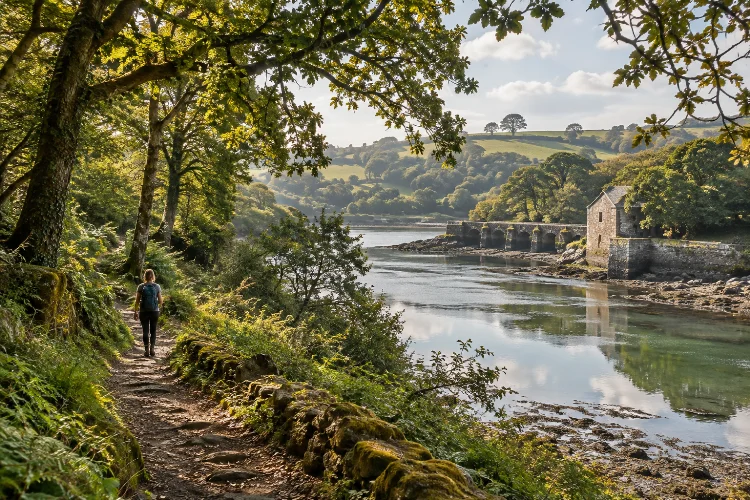
Cornwall’s famous walks are famous for a reason. Land’s End, Tintagel, St Ives and the cliffs around the Lizard deliver exactly the kind of Atlantic scenery people travel across Britain to see.
The problem is that focusing only on those places can make a walking holiday feel surprisingly predictable. Some of Cornwall’s most rewarding trails sit a little outside the standard itinerary.
They circle Iron Age headlands, disappear into oak woodland, follow abandoned industrial waterways, cross quiet farmland and emerge beside estuaries where the landscape feels completely different from the exposed coast.
These lesser-known Cornwall walks beyond the famous coastal highlights also offer something practical: variety.
You can alternate demanding cliff terrain with forest paths, river valleys and shorter circular routes rather than spending every day climbing the South West Coast Path.
The routes below are not necessarily secret, but they give you a much broader picture of Cornwall – and usually reward walkers willing to travel slightly beyond the obvious viewpoints.
Walk Around Rame Head for a Quieter Wild Coast
South-east Cornwall often receives less walking attention than the county’s far west, which makes the Rame Peninsula a useful place to begin.
The South West Coast Path route from Cawsand to Whitsand Bay covers about 5.2 miles or 8.4 kilometres.
It is classified as challenging: the opening section toward Rame Head is relatively straightforward, but steeper descents and climbs appear between the headland and Whitsand Bay
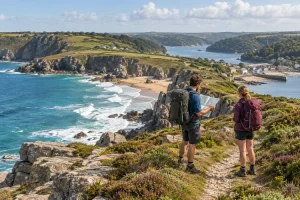
The scenery changes rapidly from sheltered Plymouth Sound to exposed cliffs and the huge sweep of Whitsand Bay. Rame Head itself contains traces of an Iron Age promontory site as well as the distinctive chapel on the summit.
This is a good option when you want dramatic coastal walking without automatically heading toward West Cornwall.
Try Dodman Point Instead of Another Famous Headland
Dodman Point is the highest headland on Cornwall’s south coast, yet it tends to receive far less attention than places such as Land’s End.
The National Trust’s long circular route covers 4.7 miles or 7.5 kilometres and takes roughly three hours. The moderate trail combines fields, sections of the Coast Path, steep stretches, archaeological remains and broad sea views.
The landscape contains Bronze Age barrows, an Iron Age earthwork, medieval field systems and the remains of a signal station. Nearby Hemmick Beach also gives the walk a more secluded coastal feel.
Rather than rushing onward to another viewpoint, allow enough time to stop at the headland. On a clear day, the scale of the south Cornwall coastline becomes obvious from here.
Circle Loe Pool for Coast, Woodland and Wetland
Not every Cornish walk needs several hours of exposed cliffs.
The circular route around Loe Pool near Helston covers approximately 6.25 miles or 10 kilometres and takes around three hours. It combines woodland, marshland and coastal scenery while keeping Cornwall’s largest natural lake close by for much of the route.
This is particularly useful after a strenuous Coast Path day because the terrain is moderate rather than continuously steep. Paths can still become muddy during winter, so decent footwear matters.
Loe Bar provides one of the most striking sections, separating the freshwater pool from the Atlantic. Do not treat its dramatic beach as a swimming stop: the National Trust explicitly warns against swimming there because of dangerous currents and tides.
It is a good reminder that quieter scenery does not automatically mean lower coastal risk.
Discover Industrial Cornwall in Luxulyan Valley
For something completely different, leave the coast and walk into Luxulyan Valley near St Austell.
The valley is now green and peaceful, but its woodland hides major traces of Cornwall’s industrial past. The Treffry Viaduct, old leat systems and remains connected with mining and the china-clay industry sit among trees, streams and enormous granite boulders.
One advantage is public transport. Luxulyan station lies on the Atlantic Coast Line between Par and Newquay, and Visit Cornwall notes that walkers can explore the valley directly from the station and reach the Treffry Viaduct on foot
Instead of approaching this as a single famous viewpoint, build a relaxed half-day exploration through the valley.
The contrast is what makes it memorable. What looks like natural woodland is actually a landscape where industrial structures have gradually been reclaimed by vegetation.
Combine Boscastle’s Cliffs With the Valency Valley
Boscastle itself is hardly unknown, but many visitors walk around the harbour and leave without exploring the valley behind it.
The Boscastle and Valency Valley circular walk solves that problem. The National Trust route measures about 4 miles or 6.4 kilometres and takes roughly two and a half hours. It combines coastal paths, farmland, woodland and several short but steep climbs.
After climbing above the harbour toward Willapark, the route eventually turns inland through Minster Wood and follows the River Valency.
That change of atmosphere is the highlight. One moment you are looking across rugged Atlantic cliffs; later you are beneath oak trees beside a quiet river.
The valley is also rich in wildlife, including woodland birds, bats and summer wildflowers.
This is definately one of the better routes for walkers who want both classic Cornwall and something less expected in the same afternoon.
Explore Pentire Point and the Rumps Without Heading to Tintagel
North Cornwall has plenty of spectacular headlands beyond its headline attractions.
The Pentire Headland Walk, just north of Polzeath, is a moderate circular route of approximately 3.4 miles or 5.4 kilometres. It follows grassy tracks and coastal paths around Pentire Point and the distinctive twin headlands known as the Rumps.
The Rumps contain the remains of an Iron Age hillfort, while the headland offers views toward Stepper Point, Trevose Head and, in clear conditions, farther north along the coast. Grey seals and peregrine falcons may also be seen around this section.
For a slightly longer alternative nearby, the Lundy Bay – Port Quin circular route covers about 3.75 miles or 6 kilometres and includes clifftop paths, the former fishing settlement at Port Quin and views toward Doyden Castle.
The area is ideal when you want north-coast drama without basing the whole day around a major attraction.
Add a Tamar Valley Woodland Walk at Cotehele
When your legs need a break from Atlantic headwinds, head east toward the Tamar Valley.
The Cotehele and Bohetherick Woodland Walk is a moderate 2.3-mile or 3.7-kilometre circuit beginning near Cotehele Quay.
It passes through ancient and semi-natural woodland beside the River Tamar, with mature trees and a much more enclosed landscape than Cornwall’s coastal trails
Another shorter Cotehele circuit links the quay with streams, a weir, woodland and Cotehele Mill over approximately 1.7 miles.
These routes are useful because they reveal how different eastern Cornwall can feel.
Instead of cliffs and Atlantic surf, you get river scenery, woodland, historic estate landscapes and traces of Cornwall’s industrial past.
Build a Walking Trip Around Contrasts
The easiest way to appreciate these quieter trails is not to walk the same type of landscape every day.
Combine an exposed Rame Head or Pentire day with Luxulyan Valley. Follow Dodman Point with a gentler loop around Loe Pool. If you are exploring North Cornwall, pair a demanding Coast Path section with the Boscastle and Valency Valley circuit.
That rhythm also helps with weather.
Strong wind may make an exposed headland unpleasant while woodland around Luxulyan, Valency or Cotehele provides a more sheltered alternative. Mud can become the bigger issue inland after sustained rain, so check conditions and choose footwear accordingly.
Download route details in advance, check current access information and carry offline navigation. It is better preperation than assuming every lesser-known path will be perfectly signposted.
Lesser-known Cornwall walks beyond the famous coastal highlights show how varied the county really is.
Rame Head and Pentire provide big coastal scenery without relying on the best-known tourist landmarks. Dodman Point combines archaeology with a wild south-coast headland, while Loe Pool mixes woodland, wetlands and Atlantic scenery.
Luxulyan reveals Cornwall’s industrial landscape beneath the trees, and Boscastle’s Valency Valley provides a surprisingly peaceful contrast to its rugged harbour.
Do not try to collect every route in one trip. Choose walks with different landscapes and leave enough time to explore them properly.
Start with one familiar Cornish coast day, then turn inland or toward a quieter peninsula. The places beyond the famous viewpoints are often where a Cornwall walking trip becomes genuinely memorable.