Inês Cardoso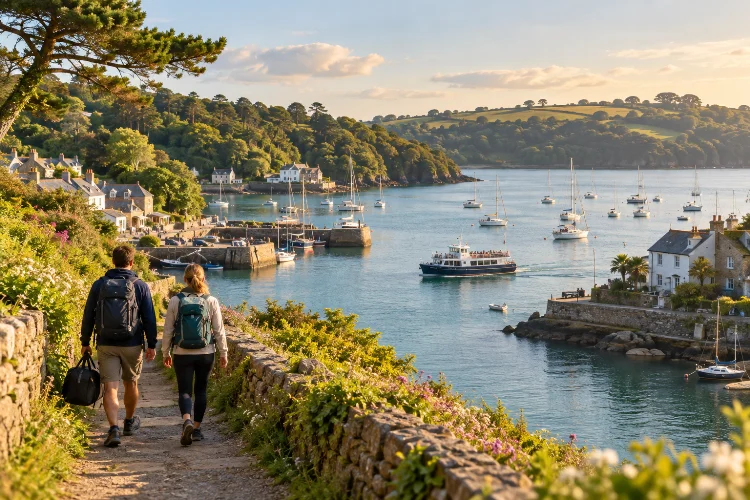
South Cornwall has the kind of coastline that makes a simple map look slightly misleading.
Falmouth, St Mawes, Mevagissey, Fowey, and Looe may appear reasonably close together, but travelling between them can involve steep coastal paths, river crossings, narrow roads, seasonal ferries, and surprisingly slow walking days.
That complexity is also what makes designing multi-day coastal itineraries across South Cornwall so rewarding.
Instead of racing between attractions, you can build a journey around fishing villages, sheltered estuaries, exposed headlands, beaches, historic harbours, and sections of the South West Coast Path.
The official Coast Path describes South Cornwall as a relatively sheltered and quieter stretch featuring the Fal estuary, Roseland Peninsula, St Austell Bay, Fowey, Looe, and the Rame Peninsula
The trick is not squeezing everything into one trip. A better itinerary balances distance with terrain, ferry schedules, weather, transport connections, and enough free time to actually enjoy where you are.
Start by Choosing the Shape of Your Journey
Before booking hotels, decide whether you want a continuous coastal journey or a collection of day walks from two or three bases.
A continuous itinerary feels more adventurous because every day moves you forward. The problem is that luggage transfers, ferry times, accommodation availability, and difficult stages can make the trip less flexible.
A hub-based journey is easier to adjust. Falmouth works particularly well as a western base because it has rail connections, ferry services, restaurants, and access to the Fal. Farther east, Fowey or Looe can anchor another part of the trip.
This approach lets you spend more time exploring and less time packing your bag every morning.
Match Daily Distance to the Terrain
Walking mileage in Cornwall should never be treated like mileage on a flat city route.
For example, the South West Coast Path lists Falmouth to Portloe at 13.6 miles or 21.9 kilometres. Parts are relatively easy, but the approach toward Nare Head and Portloe includes several steep ascents and descents.
That means a 20-kilometre day can feel much longer than expected.
For most leisure itineraries, shorter stages with time for lunch, photography, swimming, or village stops are usually more enjoyable. Save ambitious distances for sections where you already understand the terrain and have reliable transport at the finish.
It is also smart to calculate your walking time seperately from sightseeing time. Otherwise, a seemingly relaxed eight-hour day can become a race against sunset.
Use Ferries as Part of the Route, Not Just Transport
One of the most enjoyable things about South Cornwall is that rivers are part of the experience.
From Falmouth, the St Mawes Ferry provides a practical link across the Fal. Current services take roughly 20 minutes, although schedules vary by season and sailings remain subject to tides, weather, and operating conditions.
This crossing makes it much easier to connect Falmouth with the Roseland Peninsula without making a long road journey around the estuary.
Ferries should therefore be included at the itinerary-design stage. Do not build a long walking day first and then discover that the boat you need stops operating before you reach the pier.
Checking live ferry status on the morning of travel is equally important, particularly when weather deteriorates.
Build the Route Around Distinct Coastal Zones
South Cornwall becomes easier to understand when you divide it into several character areas.
Around Falmouth and the Fal, the coast combines maritime history, beaches, ferry connections, and estuary scenery. Crossing toward St Mawes brings you into the Roseland Peninsula, where the landscape becomes quieter and more rural.
Continuing east leads toward Portloe, Gorran Haven, and Mevagissey, where fishing villages and higher coastal sections create a more traditional Cornish feel.
Beyond St Austell Bay, Fowey sits beside a deep natural harbour surrounded by farmland, woodland, beaches, and rugged coastline. Farther east, Polperro and Looe provide another logical sequence of harbour settlements.
If you have more time, add the Lizard Peninsula before Falmouth. The official Penzance-to-Falmouth Coast Path itinerary covers about 61 miles over six days at average pace, travelling around the Lizard and past the Helford and Fal estuaries.
Choose Strategic Overnight Bases
Your choice of accomodation has a bigger effect on the itinerary than many travellers expect.
Small coastal villages can be wonderfully atmospheric, but they may have limited rooms, evening dining, shops, or public transport. Larger towns provide more flexibility when weather forces a last-minute change.
One practical strategy is to spend two nights in Falmouth, one around the Roseland Peninsula or Mevagissey, and two nights around Fowey or Looe.
That does not create a perfectly continuous walking route, but it reduces logistical pressure.
For travellers who want a true coast-path journey, booking each overnight stop in sequence makes sense. Just confirm cancellation policies and luggage arrangements before committing, especially during the busy summer period.
Keep One Day Flexible for Weather
A multi-day coastal itinerary becomes much stronger when one day is deliberately under-planned.
South Cornwall is often more sheltered than the north coast, but exposed headlands can still feel very different in strong wind or heavy rain. Ferries may also be affected by tide and weather conditions.
Instead of assigning every attraction to a fixed date, identify your most weather-dependent stage and move it when necessary.
For example, save a long Roseland coastal walk for the clearest day. If conditions turn poor, use that day for Falmouth, a shorter harbour walk, a museum, or a transfer between bases.
That little bit of flexibilty can prevent one bad forecast from disrupting the entire trip.
A Practical Six-Day South Cornwall Framework
A six-day itinerary gives enough time to experience several different parts of the coast without turning the holiday into an endurance challenge.
Day 1 can be based in Falmouth, giving you time to explore the waterfront and nearby beaches after arrival.
On Day 2, take the ferry toward St Mawes and explore the Roseland Peninsula. Strong walkers can use part of the Falmouth-to-Portloe Coast Path route, while others can create a shorter circular journey.
Day 3 can focus on Portloe, Gorran Haven, or Mevagissey. Choose one main walking section instead of trying to connect every village in a single day.
On Day 4, continue toward St Austell Bay and Fowey. The South Cornwall Coast Path passes through landscapes ranging from farmland and fishing settlements to areas shaped by Cornwall’s china-clay history.
Spend Day 5 exploring Fowey and the surrounding coastline before moving toward Polperro.
Use Day 6 for the final section toward Looe, or shorten the walking distance and spend more time exploring the harbour towns.
The official Falmouth-to-Looe route totals about 57 miles, but its suggested three-day version is explicitly aimed at exceptionally fit walkers. Most travellers will enjoy spreading the same coastline across more days.
Plan Your Escape Routes Before You Need Them
Advanced itinerary planning is partly about knowing how to abandon the plan.
Before every major walking stage, identify the nearest road-accessible villages, bus stops, ferry points, and alternative finishes.
Transport for Cornwall publishes current bus timetables and service updates, which are worth checking close to departure because diversions and timetable changes do occur.
Download route information before leaving your accomodation, especially when heading into quieter coastal sections.
Carry water, waterproof layers, a power bank, and offline navigation. Also check whether any ferry or bus connection is the final service of the day.
The most relevent question is not simply, “Can I walk this distance?” It is, “What happens if I need to finish three hours earlier?”
Designing multi-day coastal itineraries across South Cornwall is really an exercise in balancing ambition with flexibility.
The coastline offers historic harbours, quiet peninsulas, fishing villages, estuaries, dramatic cliffs, and excellent sections of the South West Coast Path, but those experiences work best when they are not rushed.
Plan around terrain rather than mileage alone, use ferries strategically, choose practical overnight bases, and keep at least one part of the schedule adjustable. Most importantly, check transport and operating conditions shortly before each stage.
Start with a simple route between Falmouth, the Roseland Peninsula, Mevagissey, Fowey, and Looe, then expand toward the Lizard if your schedule allows.
A little breathing room can turn a complicated coastal route into one of the most memorable ways to experience Cornwall.