Inês Cardoso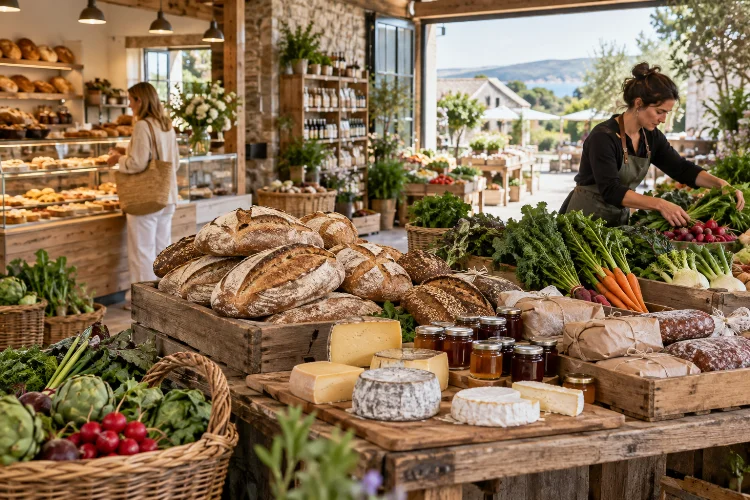
Cornwall is easy to associate with pasties, cream teas, and seafood, but stopping there would miss most of what makes the county interesting for food travellers.
Behind those famous dishes is a network of growers, bakers, butchers, cheesemakers, fishers, and small producers supplying everything from sourdough and farm vegetables to meat, preserves, cider, and locally made deli food.
Visit Cornwall describes this combination of farmland, clear coastal waters, artisan production, and local markets as a central part of the county’s food heritage.
An advanced Cornwall food trail through markets, bakeries and farm shops works best when you travel through that network rather than collecting famous restaurants.
Spend the morning talking to producers at a market, buy fresh bread from a village bakery, and finish the afternoon at a working farm where some of what you see on the shelves was grown only metres away.
With three or four days, you can build a surprisingly varied route across central and north Cornwall without turning every meal into a reservation.
Begin at a Market, Not a Restaurant
Markets are the best starting point because they show you what Cornwall is producing before someone turns those ingredients into a restaurant menu.
Truro Farmers Market on Lemon Quay is particularly useful. In 2026, the market operates year-round every Wednesday and Saturday, generally from 9am to 4pm from February onward.
Its stalls include seasonal vegetables, artisan bread, locally landed fish, meat, dairy, coffee, and pantry products from independent Cornish traders
Arrive in the morning before treating Truro as a sightseeing stop. Instead of buying random souvenirs, build a picnic: perhaps bread, cheese, vegetables, something sweet, and one product you have never tried before.
This approach changes the trail immediately. You start thinking about producers and ingredients rather than simply asking where to eat next.
Follow the Bread Trail Into Cornwall’s Villages
Cornish baking history goes far beyond the pasty.
A strong second stop is St Agnes Bakery, which says it has been baking on its original village site since 1905. Its range includes traditional Cornish pasties, breads, cakes, and its oversized sausage rolls, while many ingredients are sourced from Cornish suppliers
That local supply chain is what makes an advanced food trail more interesting. A pasty is not just a regional dish; its meat, vegetables, dairy, flour, and seasoning connect several different businesses.
Another useful bakery stop is Baker Tom’s near Redruth. The business grew from Tom Hazzledine baking a couple of loaves for a farm shop into a bakery with four Cornish shops and wider wholesale distribution.
Its range now includes organic loaves, sourdough, rye, focaccia, cakes, and pastries.
Visit early. Artisan bakeries frequently feel most alive in the morning, when bread has only recently left the ovens and the best selection is still available.
Make Trevaskis Farm a Half-Day Food Stop
Farm shops are far more useful when you can see where some of the produce actually comes from.
Trevaskis Farm near Hayle combines a produce market, butchery, restaurant, working farm, and seasonal pick-your-own experience. Its market currently opens daily, while the pick-your-own and farm park are especially active from roughly May through September.
Instead of spending twenty minutes shopping and leaving, give this stop several hours.
Walk through the growing areas when conditions allow, notice what is actually in season, and only then visit the shop. Strawberries taste more meaningful when you have just seen where they grow, while vegetables make more sense when their seasonality is visible around you.
Let the Season Change What You Buy
An advanced food trail should not have a fixed shopping list.
Summer may bring berries, tomatoes, salads, and other fresh produce. Cooler months shift attention toward roots, meat, preserves, baked goods, cheeses, and pantry ingredients.
That uncertainty is part of the experiance. Buying what looks best that morning will usually produce a more genuinely local food trip than travelling across the county in search of one predetermined product.
Use Farm Shops to Understand the Local Supply Chain
A good farm shop is somewhere between a grocery store and a map of the surrounding food economy.
At Padstow Farm Shop, produce from Tregirls Farm sits alongside food sourced from other Cornish suppliers.
The business sells its own farm-reared meat and seasonal vegetables alongside Cornish cheese, deli products, drinks, and prepared food. Its farm extends across nearly 1,000 acres overlooking the Camel Estuary and north Cornish coast.
That makes Padstow an excellent northern finish to the trail.
Do not only look for products labelled “Cornish.” Ask where they were grown, reared, baked, matured, or made. Two items produced in the same county can still have very different supply chains.
The best farm-shop visits make you curious about those connections.
Balance Famous Cornish Food With Everyday Local Food
A food trip can become strangely repetitive if every stop involves another pasty, cream tea, or seafood lunch.
Those foods absolutely belong on the route, but alternate them with what local people might actually buy for everyday meals: bread, eggs, vegetables, cheeses, meat, preserves, coffee, cakes, and ready-made deli dishes.
Cornwall’s food heritage includes both iconic dishes and a much broader community of independent producers. Markets are especially useful for seeing that diversity in one place.
Try a pasty from a traditional bakery one morning, then build lunch entirely from market products the next day.
The contrast keeps the trip intresting and prevents your food itinerary from feeling like a checklist.
Design the Route Around Market Days
Markets create fixed points in an otherwise flexible road trip.
For example, if you arrive on a Wednesday or Saturday, begin at Truro Farmers Market. Continue toward the Redruth and Hayle area for bakery and farm stops, then spend another day around St Agnes before driving north toward Padstow.
This is smarter than designing the route geographically first and only later discovering that the market you wanted to visit operates twice a week.
Opening hours also change seasonally. Farm attractions may have different hours from their shops, while independent bakeries often close earlier than conventional supermarkets.
Check each business again the day before travelling. A little preperation prevents a forty-minute drive toward a locked door.
Think About Storage Before Buying Too Much
Food trails create one practical problem: it is very easy to buy more than you can sensibly eat.
Keep a cool bag in the car for dairy, meat, and other temperature-sensitive products, especially during warmer months. Bread, cakes, jars, and packaged products are much easier to transport.
If you are staying in self-catering accomodation, use the trail to build one complete dinner rather than collecting unrelated snacks.
You could buy vegetables and meat at a farm shop, bread from a bakery, cheese at the market, and a locally produced chutney or preserve. Suddenly the shopping becomes part of the evening rather than something you carry around for three days.
This is also a good way to reduce waste—and leave room for tomorrow’s bakery stop.
Turn It Into a Three- or Four-Day Trail
For three days, make Truro your first base. Visit the farmers market when its schedule aligns, then explore the city’s independent food scene.
On day two, move west toward Redruth and Hayle, combining Baker Tom’s with several hours at Trevaskis Farm. Continue toward St Agnes either that afternoon or the following morning.
Day three can follow the north coast toward Padstow, ending at the farm shop before spending time around the Camel Estuary.
With four days, slow everything down. Add a coastal walk, stay overnight near St Agnes, or include another small market rather than driving farther.
The aim is not to recieve a prize for visiting the greatest number of food businesses. A memorable trail gives you enough time to talk to producers, understand what is seasonal, and actually eat what you buy.
An advanced Cornwall food trail through markets, bakeries and farm shops reveals a side of the county that restaurant hopping alone cannot provide.
Start at Truro Farmers Market to understand the local producer scene, follow the smell of fresh bread toward St Agnes and Redruth, spend time seeing food production at Trevaskis Farm, and finish among the farmland surrounding Padstow.
Along the way, mix famous Cornish foods with the everyday ingredients that sustain the region’s kitchens.
Plan around market days, shop seasonally, carry a cool bag, and leave space in both your schedule and appetite. Most importantly, ask where the food came from. That simple question turns a tasty road trip into a much deeper introduction to Cornwall.