Inês Cardoso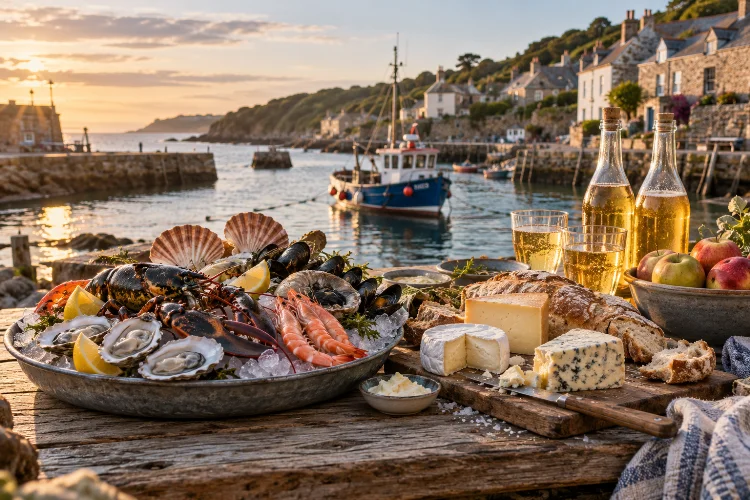
Cornwall is one of those places where the landscape seems to turn directly into food.
Fishing boats return to harbours with the day’s catch, dairy herds graze a few miles from small cheesemaking rooms, village bakeries still make pasties and bread every morning, and orchards supply apples for local cider.
That makes exploring Cornwall through seafood cheese bakeries and cider makers far more interesting than simply booking a series of restaurants. The real experience comes from following ingredients back toward the people producing them.
Cornwall’s food culture is unusually diverse because its long coastline sits beside productive farmland.
Visit Cornwall highlights everything from fresh fish and shellfish to artisan cheeses, pasties, cider, wine, preserves, and farm produce as part of the county’s modern culinary identity.
With three or four days, you can turn that variety into a practical food journey linking fishing ports, dairy country, village ovens, and apple orchards.
Start Beside the Fishing Boats in Newlyn
Seafood makes the most natural starting point because Cornwall’s relationship with fishing goes back centuries.
Newlyn remains closely connected to the working fishing industry, with its harbour and fish market giving the town a completely different character from a purpose-built food destination.
Visit Cornwall describes Newlyn as a working fishing port where the harbour, market, boats, and granite streets remain central to everyday life.
Instead of arriving with a fixed idea that you must eat lobster or crab, ask what has actually been landed locally.
The Cornwall Good Seafood Guide tracks more than 60 species landed into Cornish ports and assesses seafood according to both species and fishing method.
Its current system considers ratings from 1 to 3 recommended choices, which means buying sustainably is more complicated than simply asking whether something was caught in Cornwall.
Cornish sardines, hake, bass, crab, and other species can all appear on the recommended list depending on how they were caught. Checking the guide while travelling is an easy way to make the seafood part of the journey more meaningful.
Follow the Coast Without Ordering the Same Fish Everywhere
One of the easiest mistakes on a Cornish food trip is eating basically the same seafood lunch every day.
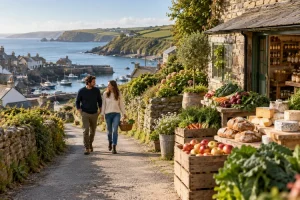
Newlyn, Mevagissey, Looe, Padstow, and smaller fishing communities have different fleets, menus, and seasonal availability.
Mevagissey, for example, still has boats landing catches into its twin harbour, while restaurants around the village commonly feature local crab, scallops, and fish.
Use each harbour to try something different.
If you had hake in Newlyn, look for sardines, shellfish, or another locally landed species farther along the coast. Ask how it was caught as well as where it came from.
That small question turns lunch from sightseeing into part of the local food supply chain.
Move Inland for Cornish Cheese
From the coast, head toward dairy country.
Cornish Yarg Cheese Shop (Lynher Dairy Ltd) near Ponsanooth is an especially useful stop because it connects one of Cornwall’s most recognisable cheeses directly with its maker.
Lynher Dairy produces Cornish Yarg, Wild Garlic Yarg, Cornish Kern, and Stithians. The dairy makes its cheeses by hand using milk from its own Ayrshire herd alongside milk supplied by selected Cornish farms.
Cornish Yarg is particularly distinctive because each cheese is wrapped in nettle leaves.
Lynher says around two tonnes of young nettles are foraged each spring from nearby countryside. The leaves are then applied by hand before the cheese develops its characteristic rind during maturation.
Instead of treating cheese as something to buy at the end of the holiday, make it one of the central experiences.
Try several styles side by side and notice how maturation changes texture and flavour. Yarg matures relatively quickly, while Cornish Kern spends much longer developing deeper caramelised notes.
Stop at a Bakery That Still Feels Part of Village Life
After cheese, the route naturally turns toward baking.
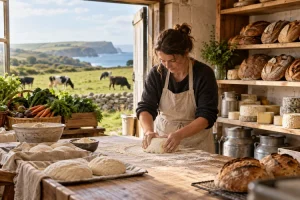
St Agnes Bakery has been baking in the village for more than a century and still works from its original site. Its range includes traditional Cornish pasties, bread, cakes, and oversized sausage rolls.
The interesting part is not simply buying another pasty.
The bakery says it sources many ingredients from businesses around Cornwall, including local meat, vegetables, eggs, cheese, dairy, preserves, and seasonings.
That makes one bakery counter a surprisingly good illustration of how many producers can feed into a single finished product.
Visit in the morning when possible. Bakeries have their own rhythm, and arriving while bread and pastries are still fresh creates a much better experiance than appearing just before closing.
Buy enough for a coastal picnic rather than eating everything immediately. St Agnes also gives you easy access to the north Cornish coast, so food and landscape can become part of the same stop.
Understand Why the Cornish Pasty Still Matters
Pasties appear everywhere in Cornwall, but they make more sense when seen as part of working history.
The traditional version combines beef, potato, onion, and swede inside pastry. Its association with mining communities made it especially useful as a portable meal, while today it remains one of Cornwall’s most recognisable foods.
Do not try to compare ten bakeries in one afternoon.
A better approach is to taste pasties from two or three places over several days and pay attention to pastry texture, seasoning, filling size, and crimp.
Local bakery products such as saffron buns, hevva cake, and Cornish fairings are also worth trying. They often recieve less attention than the pasty but help show how broad the baking tradition really is
Finish Among the Apple Orchards
After seafood, cheese, and baking, cider creates a logical final stage.
Healeys Cornish Cyder Farm near Penhallow combines orchards, production facilities, tastings, food, and visitor experiences in one location.
Its cider-making process becomes particularly active during the autumn pressing season. Healeys says roughly 2,000 tonnes of apples pass through its press house between September and early December before the juice moves into fermentation.
The scale may surprise anyone imagining cider as an entirely rustic process.
Modern temperature-controlled fermentation tanks and bottling equipment operate alongside orchard growing and traditional cider knowledge. The contrast makes the visit useful even if you are more interested in food production than drinking.
If you are driving, plan tastings responsibly and decide who is not drinking before arriving. Buying bottles to enjoy later at your accomodation is the simpler option.
Let the Season Change the Food Trail
A good Cornwall food itinerary should look different in April, August, and October.
Spring brings fresh growth, dairy production, and orchard blossom. Summer creates more opportunities for coastal eating, while autumn is particularly interesting around cider producers because apple harvesting and pressing become more visible.
Seafood changes too.
Cornwall’s seafood sustainability ratings are regularly reviewed as scientific information and fishery conditions change. That is why checking current guidance is more useful than saving a permanent list of “best Cornish fish.”
Farmers’ markets add another seasonal layer. Markets around Truro, St Ives, Flushing, Helston, and Newquay bring together vegetables, bread, meat, cheese, fish, drinks, and small producers on specific days of the week.
Build market days into the itinerary first, then arrange other stops around them.
Turn the Journey Into Three Relaxed Days
A practical three-day version can begin in West Cornwall.
Spend Day 1 around Newlyn and Mount’s Bay, focusing on seafood and the fishing landscape. Buy something fresh from a fishmonger or choose lunch based on what was actually landed rather than the most familiar menu option.
On Day 2, travel toward Ponsanooth for Cornish cheese before continuing north toward St Agnes. Visit the bakery, explore the village, and use your purchases for a cliff-side picnic.
Finish on Day 3 around Penhallow at Healeys, leaving enough time to understand the orchard-to-bottle process rather than treating it as a quick shop.
With four or five days, add Mevagissey, Truro Farmers Market, or an eastern stop around Lostwithiel and Fowey Valley’s cider-making scene.
Keep the driving sensible. Cornwall’s rural roads can make short-looking journeys take longer than expected, so two strong food stops per day are usually better than six rushed ones.
Bring a Cool Bag and Leave Space in the Schedule
Food trails require a little more planning than ordinary sightseeing.
Cheese and fresh seafood need appropriate temperature control, while bread is best bought close to when you intend to eat it. Keep a cool bag in the car and avoid leaving dairy or seafood sitting in a warm vehicle.
Self-catering accomodation can be especially useful because you can combine purchases into dinner.
Imagine local bread, Cornish cheese, seafood, seasonal vegetables, and cider collected from different stops during the day. That meal tells a clearer regional story than another generic restaurant order.
And do not schedule every hour. The most memorable stop may be a tiny farm shop, bakery, or harbour you had never planned to visit.
That kind of flexibility is definately part of the fun.
Exploring Cornwall through seafood cheese bakeries and cider makers turns food into a way of understanding the county.
Begin beside working fishing boats, follow the landscape inland toward dairy farms, stop where village bakers still shape regional recipes, and finish among apple orchards and cider presses.
Along the way, ask where ingredients were caught, grown, baked, or matured rather than simply looking for famous names.
Three or four days is enough for a strong route, especially if you keep daily driving realistic and shop seasonally. Check seafood sustainability, opening times, and producer schedules seperately before travelling.
Most importantly, arrive hungry and stay curious. Cornwall tastes much more interesting once you start following the people behind the food.